- Health
- SEE MORE
- classical
- general
- talk
- News
- Family
- Bürgerfunk
- pop
- Islam
- soul
- jazz
- Comedy
- humor
- wissenschaft
- opera
- baroque
- gesellschaft
- theater
- Local
- alternative
- electro
- rock
- rap
- lifestyle
- Music
- como
- RNE
- ballads
- greek
- Buddhism
- deportes
- christian
- Technology
- piano
- djs
- Dance
- dutch
- flamenco
- social
- hope
- christian rock
- academia
- afrique
- Business
- musique
- ελληνική-μουσική
- religion
- World radio
- Zarzuela
- travel
- World
- NFL
- media
- Art
- public
- Sports
- Gospel
- st.
- baptist
- Leisure
- Kids & Family
- musical
- club
- Culture
- Health & Fitness
- True Crime
- Fiction
- children
- Society & Culture
- TV & Film
- gold
- kunst
- música
- gay
- Natural
- a
- francais
- bach
- economics
- kultur
- evangelical
- tech
- Opinion
- Government
- gaming
- College
- technik
- History
- Jesus
- radio
- movies
- services
- Church
- podcast
- Education
- international
- Transportation
- Other
- kids
- podcasts
- philadelphia
- Noticias
- love
- sport
- Salud
- film
- and
- 4chan
- Disco
- Stories
- fashion
- Arts
- interviews
- hardstyle
- entertainment
- humour
- medieval
- literature
- alma
- Cultura
- video
- TV
- Science
- en
On the Study of Parasitic Diversity and Life CyclesStephen Greiman, PhDDepartment of Biology at Georgia Southern University
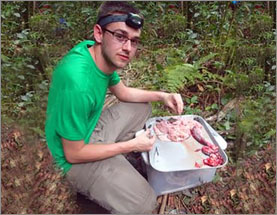
Stephen\xa0Greiman, PhD, is an assistant professor at Georgia Southern University where he studies diverse groups of parasitic organisms. He discusses the following:
\xb7\xa0\xa0\xa0\xa0\xa0\xa0\xa0\xa0\xa0How a pork or beef tapeworm could find its way into the brain, spinal cord, organ, or a body cavity of a human being
\xb7\xa0\xa0\xa0\xa0\xa0\xa0\xa0\xa0\xa0What the difference is between the parasite\u2019s role in an intermediate host and a final or definitive host
\xb7\xa0\xa0\xa0\xa0\xa0\xa0\xa0\xa0\xa0What types of treatments are available to humans who have been invaded by a parasite
Dr.\xa0Greiman\xa0focuses on the study of tapeworms and flukes, which have complex life cycles and use at least one intermediate host before reaching the final or definitive host. He explains the difference between parasitic function in intermediate versus definitive hosts, and the pathologies that can be caused by parasites in both types of hosts.
He gives an example of how parasites change the behavior of intermediate hosts as a way of making them more susceptible to predation, such as parasitic flukes which cause a snail\u2019s tentacles to pulsate and change colors, making them look more like maggots. In other cases, a fluke may cause a snail to crawl on vegetation and thereby become more visible by predators.
Dr.\xa0Greiman\xa0also talks about how the consumption of undercooked beef or pork can cause a human to become an incidental intermediate host for tapeworm larvae which can cause all kinds of diseases and pathologies, such as seizures.
Currently, there is a lot of interest in host microbiome and parasite microbiome interactions, and this research is being aided by genomic sequencing and transcriptomics.
For more information about the Dr.\xa0Greiman\u2019s research, visit\xa0http://www.stephengreiman.com/.