- TV
- SEE MORE
- classical
- general
- talk
- News
- Family
- Bürgerfunk
- pop
- Islam
- soul
- jazz
- Comedy
- humor
- wissenschaft
- opera
- baroque
- gesellschaft
- theater
- Local
- alternative
- electro
- rock
- rap
- lifestyle
- Music
- como
- RNE
- ballads
- greek
- Buddhism
- deportes
- christian
- Technology
- piano
- djs
- Dance
- dutch
- flamenco
- social
- hope
- christian rock
- academia
- afrique
- Business
- musique
- ελληνική-μουσική
- religion
- World radio
- Zarzuela
- travel
- World
- NFL
- media
- Art
- public
- Sports
- Gospel
- st.
- baptist
- Leisure
- Kids & Family
- musical
- club
- Culture
- Health & Fitness
- True Crime
- Fiction
- children
- Society & Culture
- TV & Film
- gold
- kunst
- música
- gay
- Natural
- a
- francais
- bach
- economics
- kultur
- evangelical
- tech
- Opinion
- Government
- gaming
- College
- technik
- History
- Jesus
- Health
- movies
- radio
- services
- Church
- podcast
- Education
- international
- Transportation
- Other
- kids
- podcasts
- philadelphia
- Noticias
- love
- sport
- Salud
- film
- and
- 4chan
- Disco
- Stories
- fashion
- Arts
- interviews
- hardstyle
- entertainment
- humour
- medieval
- literature
- alma
- Cultura
- video
- Science
- en
166 - Pain and Glory
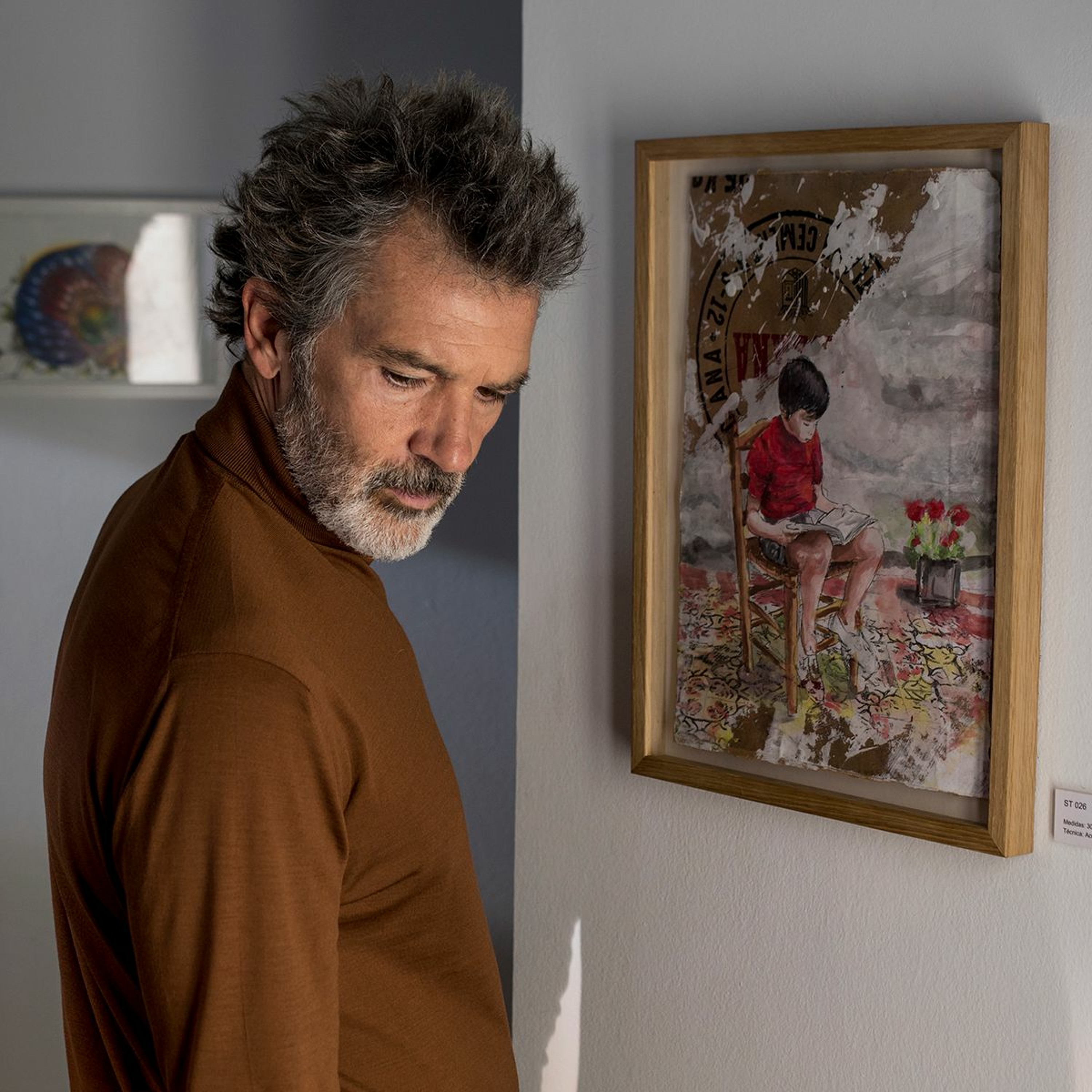
It's probably fair to say that Pedro Almod\xf3var's films seem to be made specifically for Jos\xe9. It's in every detail: the locations, eras, sexuality, ways of life, attitudes, class, love of cinema and countless other aspects of Almod\xf3var's ouevre speak to Jos\xe9 on a deep, intimate level. He's watched every one of his films time and time again, and he considers Pain and Glory, which he has already seen twice and plans to see again, a masterpiece. Mike doesn't have anything like such a specific relationship to Almod\xf3var, and indeed has only seen one other of his films, 2016's Julieta, which he liked very much - and indeed he likes Pain and Glory just as much... though not quite as much as Jos\xe9.\n\nWe discuss how Pain and Glory stands alone but might benefit from being seen in relation to Almod\xf3var's ouevre. Several of his regular collaborators appear, including Cecilia Roth, Antonio Banderas, Julieta Serrano and Pen\xe9lope Cruz; this film, as with The Law of Desire, Broken Embraces and Bad Education, is about a filmmaker; it makes use of art as an unconscious but pointed visual layering and underlying theme; images of characters writing on typewriters or computers show up - this is a film about, amongst other things, writing. Mike brings up the way chance events are used to drive the plot forward and thinks about how they're contextualised; Jos\xe9 praises how fluid Almod\xf3var's storytelling is here, effortlessly bringing together disparate timelines and plot strands.\n\nIs this autofiction, as the mother in the film accuses her filmmaker son of so often indulging in? Jos\xe9 considers the appearance of Almod\xf3var's own mother in his previous films and how so many of his previous films are in fact about mothers (All About My Mother and Volver being the most obvious examples). We discuss the structure of the film, the movement from the relationship with an actor who's an addict to a previous relationship with an addict, through the performance of a confessional monologue titled Addiction, then a sexual awakening seen from a young boy's point of view. Representations of Spain in the 50s, memories of the past and a present setting fluidly intermingle. We also consider its themes of illness, ageing and loss, and how it's a film about cinematic expression, the revelation that half of the diegetic world is in fact a film within a film recontextualising half the story, similar to Bad Education but to different effect here.\n\nIt's a film on which as soon as we finished, Jos\xe9 regretted not saying more: The references to Lucrecia Martel's La ni\xf1a santa, the clear allusion to Fellini's 8\xbd, the use of Rosal\xeda to sing the song by the river, the section on films that feature water such as Splendor in the Grass and Niagara. He's only scratched the surface of a great film.\n\nRecorded on 4th September 2019.