Murder Madness! Seven Secret Service men had completely disappeared. Another had been found a screaming, homicidal maniac, whose fingers writhed like snakes. So Bell, of the secret "Trade," plunges into South America after The Master--the mighty, unknown octopus of power whose diabolical poison threatens a continent! (Summary by Murray Leinster)
18 episodes
The four men had been scrutinized, watched, investigated, and intensively trained for more than a year. They were the best men to be found for that first, all-important flight to the Moon--the pioneer manned rocket that would give either the East or the West control over the Earth.Yet when the race started, Adam Crag found that he had a saboteur among his crew ... a traitor! Such a man could give the Reds possession of Luna, and thereby dominate the world it circled.Any one of the other three could be the hidden enemy, and if he didn't discover the agent soon--even while they were roaring on rocket jets through outer space--then Adam Crag, his expedition, and his country would be destroyed!
(Summary by Jeff Sutton)
22 episodes
An alien race has put a station on Earth and other planets in order to steal the rays of the sun, possible causing the sun to nova within two years. Burl Denning, a high school student, is the only person who has the power to stop the alien project. Can he and the crew of the experimental space ship Magellan act in time to save the earth? (Summary by Tom Weiss)
19 episodes

In a former book, called "Lord of the World," I attempted to sketch the kind of developments a hundred years hence which, I thought, might reasonably be expected if the present lines of what is called "modern thought" were only prolonged far enough; and I was informed repeatedly that the effect of the book was exceedingly depressing and discouraging to optimistic Christians. In the present book I am attempting -- also in parable form -- not in the least to withdraw anything that I said in the former, but to follow up the other lines instead, and to sketch -- again in parable -- the kind of developments, about sixty years hence which, I think, may reasonably be expected should the opposite process begin, and ancient thought (which has stood the test of centuries, and is, in a very remarkable manner, being "rediscovered" by persons even more modern than modernists) be prolonged instead.We are told occasionally by moralists that we live in very critical times, by which they mean that they are not sure whether their own side will win or not. In that sense no times can ever be critical to Catholics, since Catholics are never in any kind of doubt as to whether or no their side will win. But from another point of view every period is a critical period, since every period has within itself the conflict of two irreconcilable forces. It has been for the sake of tracing out the kind of effects that, it seemed to me, each side would experience in turn, should the other, at any rate for a while, become dominant, that I have written these two books. (From the preface of The Dawn of All)
20 episodes
SPACE PLATFORM tells the exciting story of a young man helping to build this first station. With scientific accuracy and imagination Murray Leinster, one of the world's top science-fiction writers, describes the building and launching of the platform. Here is a fast-paced story of sabotage and murder directed against a project more secret and valuable than the atom bomb!
- Summary by Gutenberg text
13 episodes
The Lost World is a novel released in 1912 by Sir Arthur Conan Doyle about an expedition to a plateau in the Amazon basin in Brazil that encountered prehistoric animals. It has been the inspiration for subsequent fiction, including Michael Crichton's Jurassic Park.
13 episodes
How could this man awaken with no past—no childhood—no recollection except of a vague world of terror from which his mother cried out for vengeance and the slaughter of his own people stood as a monument of infamy? - Summary by Gutenberg text
Image is an illustration from the Gutenberg text.
17 episodes

Tara of Helium, John Carter's second child, is nearly as beautiful as her mother, Deja Thoris, and as independent-minded as her father. These qualities cause her much grief during a long series of imprisonments by hostile aliens. She is aided by a rejected suitor whom she fails to recognize but gradually learns first to trust and then to love, despite what she imagines to be a hopeless chasm between their social classes. A highly evolved race of intelligent beings is discovered in this novel, one of whom forms with Tara a complicated relationship that opens his eyes to the value of certain aspects of life which he and his kind have shed. We also learn of an ancient Martian culture differing markedly from the technologically advanced civilizations of other city-states; one of its pastimes is a bloody variation of Martian chess, played with human beings as the game pieces. For variety of character and incident, this novel is unsurpassed by its four predecessors in the series. (Summary by Thomas Copeland)
23 episodes
When a super-robot named Snookums discovers how to build his own superbombs, it becomes obvious that Earth is by no means the safest place for him to be. And so Dr. Fitzhugh, his designer, and Leda Crannon, a child psychologist acting as Snookums’ nursemaid, agree to set up Operation Brainchild, a plan to transport the robot to a far distant planet. But the space ship becomes the scene of some frightening events--the medical officer is murdered, and Snookums appears to be the culprit… - Summary by Mark Nelson
24 episodes
Five short Science Fiction stories. - Summary by Richard Kilmer
13 episodes
This post-apocalyptic novella tells the story of the downfall of civilisation and mankind following a solar cataclysm in the late 20th century. To survive, the remnants of humanity had to build a new civilization underground in the complete absence of all species except mankind, choosing to base it only on love and beauty, the fine arts and intellectual pursuits.
In view of the sun's current inactivity, this frighteningly prophetic tale might have been written today, saving that the cultural references and the fluid prose might be beyond, if one dares say so, many modern writers.
Tarde was a French sociologist, criminologist and social psychologist. This novella was, as far as I know, his only venture into the writing of fiction, and is heavy with philosophical, sociological, scientific and even political concepts. It is an absorbing and thought-provoking work. (Summary by Ruth Golding)
7 episodes
The Psi Lodge had their ways and means of applying pressure, when pressure was needed. But the peculiar talent this fellow showed was one that even they'd never heard of...! - Summary by John Berryman
15 episodes
FBI agent Kenneth Malone lives in a world where psionic powers such as telepathy and teleportation exist. He must cope with them as well as an FBI Director who leaves Malone continually confused about what situation he is being asked to handle and what he is expected to do about it.
Someone or something is causing confusion in the U.S. Government, Unions, The Mafia, and other sectors of society and Malone has been given the job of finding the source of the confusion. A good story composed of science fiction and slap stick comedy with a bit of romance thrown into the mix.
(Summary by Richard Kilmer)
19 episodes
In science-fiction, as in all categories of fiction, there are stories that are so outstanding from the standpoint of characterization, concept, and background development that they remain popular for decades. Two such stories were Murray Leinster's The Mad Planet and Red Dust. Originally published in 1923, they have been reprinted frequently both here and abroad. They are now scheduled for book publication. Especially for this magazine, Murray Leinster has written the final story in the series. It is not necessary to have read the previous stories to enjoy this one. Once again, Burl experiences magnificent adventures against a colorful background, but to the whole the author has added philosophical and psychological observations that give this story a flavor seldom achieved in science-fiction. - Summary by Original magazine blurb from Science Fiction Plus, June 1953
3 episodes
There were nine major planets in the Solar System and it was within their boundaries that man first set up interplanetary commerce and began trading with the ancient Martian civilization. And then they discovered a tenth planet—a maverick!
This tenth world, if it had an orbit, had a strange one, for it was heading inwards from interstellar space, heading close to the Earth-Mars spaceways, upsetting astronautic calculations and raising turmoil on the two inhabited worlds.
But even so none suspected then just how much trouble this new world would make. For it was WANDL THE INVADER and it was no barren planetoid. It was a manned world, manned by minds and monsters and traveling into our system with a purpose beyond that of astronomical accident! - Summary from the Original book jacket blurb. Sequel to Brigands of the Moon
20 episodes
The fourth book of the Barsoom series, Thuvia, Maid of Mars takes up the story of Thuvia, now Princess of Ptarth, and Carthoris, son of John Carter and Dejah Thoris. Thuvia is betrothed to Kulan Tith, Jeddak of Kaol in an arranged marriage. She spurns the advances of a suitor, Astok of Dusar, who then plots to abduct Thuvia, and frame Carthoris for the crime, igniting a war between Kaol, Ptarth and Helium. (Summary by Mark Nelson)
14 episodes
In the fifth book in the Barsoom series, Tara of Helium, daughter of John Carter, becomes lost in an unknown area of Mars when her single-seat flier is caught in a rare Martian hurricane. She is first captured by the bizarre and hideous Kaldanes, then the brutal Manatorians, where she is the prize in a tournament of Martian chess, jetan, that is played by live game pieces, and to the death! (Summary by Mark Nelson)
23 episodes
They were four of the greatest minds in the Universe: Two men, two women, lost in an experimental spaceship billions of parsecs from home. And as they mentally charted the Cosmos to find their way back to earth, their own loves and hates were as startling as the worlds they encountered. - Summary by Original book cover
9 episodes
Jules Verne is back with another action-packed adventure--this time in India with a steam-powered elephant! Maucler, Captain Hood, Banks, and Colonel Munro set out for a pleasure trip across India in their train pulled by Behemoth, their mechanical elephant, but soon realize that they are in the midst of a plot by the Colonel's archenemy, Nana Sahib, to get vengeance for past wrongs and seize control of India once and for all. Will they be able to escape from a hidden assassin and uncover a secret hidden for decades in time to stop Nana Sahib? You’ll have to join us in this exciting story read by Librivox volunteers to find out! (Summary by AdeledePignerolles)
30 episodes
Ethan Hopkins and Mickey McSquizzle-a "Yankee" and an "Irishman"-encounter a colossal, steam-powered man in the American prairies. This steam-man was constructed by Johnny Brainerd, a teenaged boy, who uses the steam-man to carry him in a carriage on various adventures. - Summary by Wikipedia
20 episodes
Wat doet een Amerikaan, als de Burgeroorlog is afgelopen en hij daarvoor geen kanonnen meer kan maken? Hij maakt een kanon om de maan te beschieten. Dit humoristische sciencefictionverhaal van Jules Verne was een van de eerste in het genre en gaf en passant een overzicht van de kennis van de astronomie rond 1870. (Bart de Leeuw)
48 episodes

There was no life on the asteroid, but the miles of rock-hewn corridors through which the earth party wandered left no doubt about the purpose of the asteroid. It was a mighty fortress, stocked with weapons of destruction beyond man's power to understand.
And yet there was no life here, nor had there been for untold centuries.
What race had built this stronghold? What unimaginable power were they defending against? Why was it abandoned? There was no answer, all was dead. But—not quite all.
For in a room above the tomb-like fortress a powerful transmitter beamed its birdlike, fluting sounds toward earth. Near it, on a huge star-map of the universe, with light-years measured by inches, ten tiny red sparks were moving, crawling inexorably toward the center.
Moving, at many times the speed of light, with the acquired mass of suns ... moving, on a course that would pass through the solar system.
The unknown aliens would not even see our sun explode from the force of their passing, would not even notice the tiny speck called Earth as it died.... - Summary by From original text
10 episodes
The Canitaurs, who believe that the past is the key to the future, and the Zards, who believe that the past is just the past, are at war and each believes that a redeemer will arrive and propel them to victory. What role Jehu, who has been summoned to the island of Daem, will play in stopping these hostilities is unclear but he soon learns that he will determine not just the outcome of the war but the fate of all humanity.
14 episodes
Science fiction is a genre encompassing imaginative works that take place in this world or that of the author’s creation where anything is possible. The only rules are those set forth by the author. The speculative nature of the genre inspires thought and plants seeds that have led to advances in science. The genre can spark an interest in the sciences and is cited as the impetus for the career choice of many scientists. It is a playing field to explore social perspectives, predictions of the future, and engage in adventures unbound into the richness of the human mind.
20 episodes
Poor Diana May. Her fiancé has jilted her, her parents think she is an encumbrance and no one recognises her intelligence. She seems destined to remain unloved, unappreciated and unpaid - until she decides to take control of her life. It all begins with an advertisement for an assistant to an eccentric scientist with a hidden laboratory in Switzerland... - Summary by Newgatenovelist
26 episodes
There are giant, technologically superior aliens who have conquered Earth. People live like vermin in holes in the insulation material of the walls of the homes the monsters have built, sneaking out to steal food and other items from the aliens. A complex social and religious order has evolved, with women preserving knowledge and working as healers, while men serve as warriors and thieves. For the aliens, men and women are just a nuisance, neither civilized nor intelligent, and are generally regarded as vermin to be exterminated. This story begins "Mankind consisted of 128 people.
The sheer population pressure of so vast a horde had long ago filled over a dozen burrows." - Summary by the author and phil chenevert
9 episodes
Science fiction is a genre encompassing imaginative works that take place in this world or that of the author’s creation where anything is possible. The only rules are those set forth by the author. The speculative nature of the genre inspires thought and plants seeds that have led to advances in science. The genre can spark an interest in the sciences and is cited as the impetus for the career choice of many scientists. It is a playing field to explore social perspectives, predictions of the future, and engage in adventures unbound into the richness of the human mind. - Summary by Amy Gramour
20 episodes
The irrepressible Science Fiction author Randall Garrett wrote a wide array of short stories for the SF magazines of his day poking fun at many of the then current cherished beliefs, but he had a habit of writing under many different names. These three stories were all published in the 1960's and no matter what the by-line may look like, be assured they were all written by him in his quirky, imaginative and very entertaining style. The three here for your enjoyment are: With No Strings Attached; The Destroyers and In Case of Fire
3 episodes
When an atomic explosion destroys the battleship Alaska, Lt. Commander Frank Jacklin returns to consciousness in New York and is shocked to find himself in the body of Winnie Tompkins, a dissolute stock-broker. Unable to explain his real identity, Jacklin attempts to fit into Tompkins' way of life. Complications develop when Jacklin gets involved with Tompkins' wife, his red-haired mistress and his luscious secretary. Three too many women for Jacklin to handle. His foreknowledge of the Alaska sinking and other top secret matters plunges him into a mad world of intrigue and excitement in Washington—that place where anything can happen and does! Where is the real Tompkins is a mystery explained in the smashing climax.
Completely delightful, wholly provocative, the Rat Race is a striking novel of the American Scene. - Summary by Book Intro
35 episodes
Randall Garrett sticks a sharp needle into our government and society in this wonderful story. He projects the current trends towards paternalistic government into the future. Yes, we have attained a world government and everyone is equal whether they want to be or not; everyone is taken care of no matter how incompetent, stupid or sleazy they are and everyone is out to undermine everyone else. The author predicts (sadly only too well) what the trends of today will eventually produce if allowed to continue.
But wait! there is hope in the asteroid belt where jerks and incompetents are weeded out by hard physical laws and only those who possess common sense and the ability to actually survive are allowed to govern. But will the Earth government allow this to continue? Of course not. Listen to this great story to have a peek into the future.
3 episodes
Machines are infallible. Humans are not. The crew of The Ambassador knew their ship could not possibly fail, but what of themselves? And how could they defend against an unknown enemy with unknown motives and superhuman abilities, intent on driving each one of them beyond his own personal breaking point? - Summary by Summary by Peter Eastman
7 episodes
Science fiction is a genre encompassing imaginative works that take place in this world or that of the author’s creation where anything is possible. The only rules are those set forth by the author. The speculative nature of the genre inspires thought and plants seeds that have led to advances in science. The genre can spark an interest in the sciences and is cited as the impetus for the career choice of many scientists. It is a playing field to explore social perspectives, predictions of the future, and engage in adventures unbound into the richness of the human mind. - Summary by Amy Gramour
20 episodes
The Company insures you against everything. Everything except war, that is. But they've put an end to wars (or so they claim). The Company also controls everything. Including all the sources of weapons. The Company is dedicated to the happiness of mankind (or so they claim). Medical Treatment and Law Enforcement are just a few of the other services they provide to the entire world. Claims Adjuster Wills was a happy Company employee until his path crossed those of a man with no legs and a mysterious woman. All of a sudden, his world was turned upside down, and his decisions could determine the future of the planet. This collaborative work was originally published under the pseudonym Edson McCann. It was the winner of the 1955 Galaxy-Simon & Schuster novel contest. - Summary by Nick Bulka
19 episodes
This 1957 book contains thirteen pre-space-exploration stories for young readers. Some of the details show their dated composition (we now know the earth looks blue not green from space) but the sense of adventure will still hold attention for the young. - Summary by david wales
13 episodes
The Masters had ruled all space with an unconquerable iron fist. But the Masters were gone. And this new, young race who came now to take their place—could they hope to defeat the ancient Enemy of All? - Summary from Gutenberg text
14 episodes
Fruyling's World
... rich in the metals that kept the Terran Confederation going—one vital link in a galaxy-wide civilization. But the men of Fruyling's World lived on borrowed time, knowing that slavery was outlawed throughout the Confederation—and that only the slave labor of the reptilian natives could produce the precious metals the Confederation needed!
As the first hints of the truth about Fruyling's World emerge, the tension becomes unbearable—to be resolved only in the shattering climax of this fast-paced, thought-provoking story. - Summary by Book Intro
22 episodes
Legion was homeless and hungry and looking for a way to get to Miami when he crossed paths with Foster. Foster enlists Legion's aid in dealing with the mysterious light-beings called Hunters who he says have been chasing him, and also in recovering his lost memories. He possesses a journal with entries dating back centuries which contain the only clues to his identity. Their quest involves Stonehenge, alien space ships, far away planets and unique ways of dealing with age and life's memories. - Summary by Nick Bulka
20 episodes
Jim Orrington, news reporter, is at the office when the Secretary of War brings in a letter--mostly likely a prank--that demands all the nations of the world to disarm in one year or have all their battleships destroyed. This letter, signed "The man who will stop all war", is ignored by Orrington's fellow reporters and by the U.S. government, but he decides to dig deeper. With the help of Tom and Dorothy Haldane, Jim Orrington embarks on an adventure around the world trying to stop the man who is determined to end all fighting before he catapults the entire world into chaos and war! - Summary by Adele de Pignerolles
20 episodes
The Alien did not intend to crash land on earth, but he did. The alien tried to communicate with humans, but he could not. The alien did not wish to be captured, and so he wasn't. For over 5 years he roamed, looting and killing as necessary. Why could the combined forces and brains of all the nations on earth not deal with him or it? Well, Earth was faced with a strange problem indeed. They had to have a superman. And there weren't any available. So perhaps one had to be made.... - Summary by preface and phil chenevert
8 episodes
Olga Romanoff (1894) is a science fiction novel by the English writer George Griffith, first published as The Syren of the Skies in Pearson's Weekly.
The novel continues (from The Angel of the Revolution) the tale of a worldwide brotherhood of anarchists fighting the world armed with fantastical airships, ending on an apocalyptic note as a comet smashes into the earth. - Summary by Wikipedia
34 episodes
Science fiction is a genre encompassing imaginative works that take place in this world or that of the author’s creation where anything is possible. The only rules are those set forth by the author. The speculative nature of the genre inspires thought and plants seeds that have led to advances in science. The genre can spark an interest in the sciences and is cited as the impetus for the career choice of many scientists. It is a playing field to explore social perspectives, predictions of the future, and engage in adventures unbound into the richness of the human mind. - Summary by A. Gramour
20 episodes
At two years old, Timmy was an imbecile, incapable of talking or controlling his own body. At four years old, he abruptly stood up and began speaking in full sentences. Within a few years, he was a genius. But it was all a terrible mistake, one that might put the whole universe at risk. - Summary by Peter Eastman
4 episodes
After being exiled from her home and family, Vera Zarovich finds herself in Mizora, a civilization at the center of the Earth made up entirely of women. This text recounts her experiences there and what she learns during in time in this "utopian" civilization. - Summary by casmith512
25 episodes

Recopilación de una docena de relatos de misterio y una teoría del cosmos que constituyen un pilar fundamental para el desarrollo de la literatura fantástica y la ciencia ficción en la Argentina. Leopoldo Lugones (1874-1938) fue una figura central en la literatura argentina y universalmente reconocido; fue conductor de pensamiento y estilos. No deja de generar constantes polémicas; no tanto por su obra literaria indiscutible, sino por su protagonismo político, que sufrió fuertes virajes ideológicos a lo largo de su vida, pasando por el socialismo, el liberalismo, el conservadurismo y el fascismo. Su trabajo incesante se plasmó en numerosos escritos, artículos de prensa y conferencias que le merecieron el nombramiento en la Asamblea de Cooperación Intelectual de la Liga de las Naciones (1924), el Premio Nacional de Literatura (1926) y la presidencia de la Sociedad Argentina de Escritores, fundada con su impulso (1928). Director de la Biblioteca Nacional de Maestros; era éste su cargo cuando las circunstancias políticas de la década de 1930 (la primera "Década Infame") lo llevaron a suicidarse. Esto aconteció el 18 de febrero de 1938 en un hotel del Tigre (llamado "El tropezón") al ingerir una mezcla de cianuro y whisky. - Summary by Phileas Fogg
24 episodes
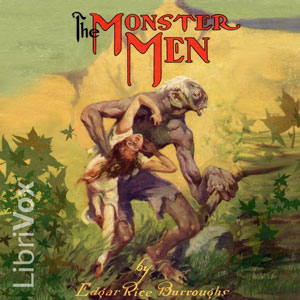
Dr. Arthur Maxon has a dream: to create an artificial human being! His first twelve experiments have resulted only in grotesque, subhuman monsters. But Number Thirteen is perfect, and will make an ideal mate for Virginia, Dr. Maxon’s only daughter. But his monstrous plan goes awry when it is disrupted by pirates and Maxon’s duplicitous assistant, Carl von Horn. - Summary by Mark Nelson
17 episodes
Science fiction is a genre encompassing imaginative works that take place in this world or that of the author’s creation where anything is possible. The only rules are those set forth by the author. The speculative nature of the genre inspires thought and plants seeds that have led to advances in science. The genre can spark an interest in the sciences and is cited as the impetus for the career choice of many scientists. It is a playing field to explore social perspectives, predictions of the future, and engage in adventures unbound into the richness of the human mind. - Summary by A. Gramour
20 episodes
As the title indicates, here are three SF stories by Frank Herbert, Missing LInk, originaly purlished in Astounding SF, 1959; Operation Haystack, also published in Astounding SF 1959; and Old Rambling House, published in Galaxy SF 1958. - Summary by Phil chenevert
3 episodes
A science fiction story by the great Keith Laumer - what more needs to be said? - But I will say more nevertheless. A young man sets out from his rural town to see the world for himself. What is really over the next hill? What does a big city look like? Is there really an ocean? After all, we only have the testimony of others that tell us about these things. Full confidence and belief in himself, he boards the local train, falls asleep and then ..... finds himself alone, the three cars abandoned .... the engine is gone and the tracks; well, the tracks just end in the middle of a grain field. What is going on? What kind of reality is this? Or is what we 'know' just illusions and in fact, It Could Be Anything!!! Summary by Phil chenevert
4 episodes
Las fábulas ideadas por H.G. Wells (1866-1946), uno de los padres, acaso el más notable, de la ciencia ficción, han demostrado a lo largo del tiempo mantener un vigor y tocar unos resortes del inconsciente humano que a menudo las han elevado a iconos del mundo moderno. "La guerra de los mundos" (1898), relato trepidante que narra la invasión de la Tierra por los marcianos y que supuso por primera vez la irrupción de seres de otros planetas en el nuestro, marcó en buena medida la fantasía del siglo XX y no tardó en convertirse en uno de los más importantes de la ciencia ficción, sirviendo de inspiración a numerosos artistas posteriores en los ámbitos de la radio, el cine, la literatura, el cómic y la televisión. Summary by Phileas Fogg.
27 episodes
Science fiction is a genre encompassing imaginative works that take place in this world or that of the author’s creation where anything is possible. The only rules are those set forth by the author. The speculative nature of the genre inspires thought and plants seeds that have led to advances in science. The genre can spark an interest in the sciences and is cited as the impetus for the career choice of many scientists. It is a playing field to explore social perspectives, predictions of the future, and engage in adventures unbound into the richness of the human mind. (A.Gramour)
20 episodes