Kitchen Dangerous (part 5): First Aid for Cuts
#GeekingOutSeries/Safety/KitchenDangerous/5
This post is part of the Geeking Out series which presents data-driven information on food and farming, safety in the kitchen, practical science for cooks, cooking techniques and processes and other relevant nerdy stuff that every cook should know.\xa0 This topic is from the chapter, Safety 101.
In parts 1 to 4 of Kitchen Dangerous, we covered fire prevention, what to do if a fire occurs, preventing burns from frying and other hot items, first aid using ingredients you probably have at home and Knife Safety guidelines. In this final installment of Kitchen Dangerous, we\u2019ll talk about First Aid for Cuts and add to our arsenal of home remedies. At the end of the post, we\u2019ll summarize the rules from all five parts of Kitchen Dangerous.\xa0 Read Kitchen Dangerous: \xa0part 1,part 2, part 3 and part 4.\xa0
First Aid for Cuts
Minor cuts and burns are occasional nuisances for every cook and are often treatable at home. As always, seek medical assistance if injuries are serious.\xa0 For minor cuts or scrapes, here\u2019s what to do:
1.\xa0\xa0\xa0\xa0\xa0 Control bleeding by applying pressure for at least 5 minutes
2.\xa0\xa0\xa0\xa0\xa0 Clean and Cover
* \xa0Wash hands then rinse wound with running water to remove dirt and debris.
* \xa0Apply a topical home remedy (see below) or over the counter antibiotic to minor cuts and scrapes that do not need medical attention.
* Cover the wound with clean bandage, gauze pad or tape to prevent infection and further injury.
* Don't tie or tape the bandage too tight.
Seek medical assistance if the cut is too large or deep, is on the face or any area where scarring is a concern, or if you need protection from tetanus.
For more information, check out St. Luke\u2019s Health System.
Home Remedies
In\xa0 part three of Kitchen Dangerous, we covered some of the natural remedies you may already have at home that you can use as topical first aid for burns.\xa0 The good news is, most of them can also be used for minor cuts and scrapes. In addition to honey, moringa, broadleaf plantain, aloe vera and tomatoes, here are a few more kitchen superstars to add to your first aid kit.
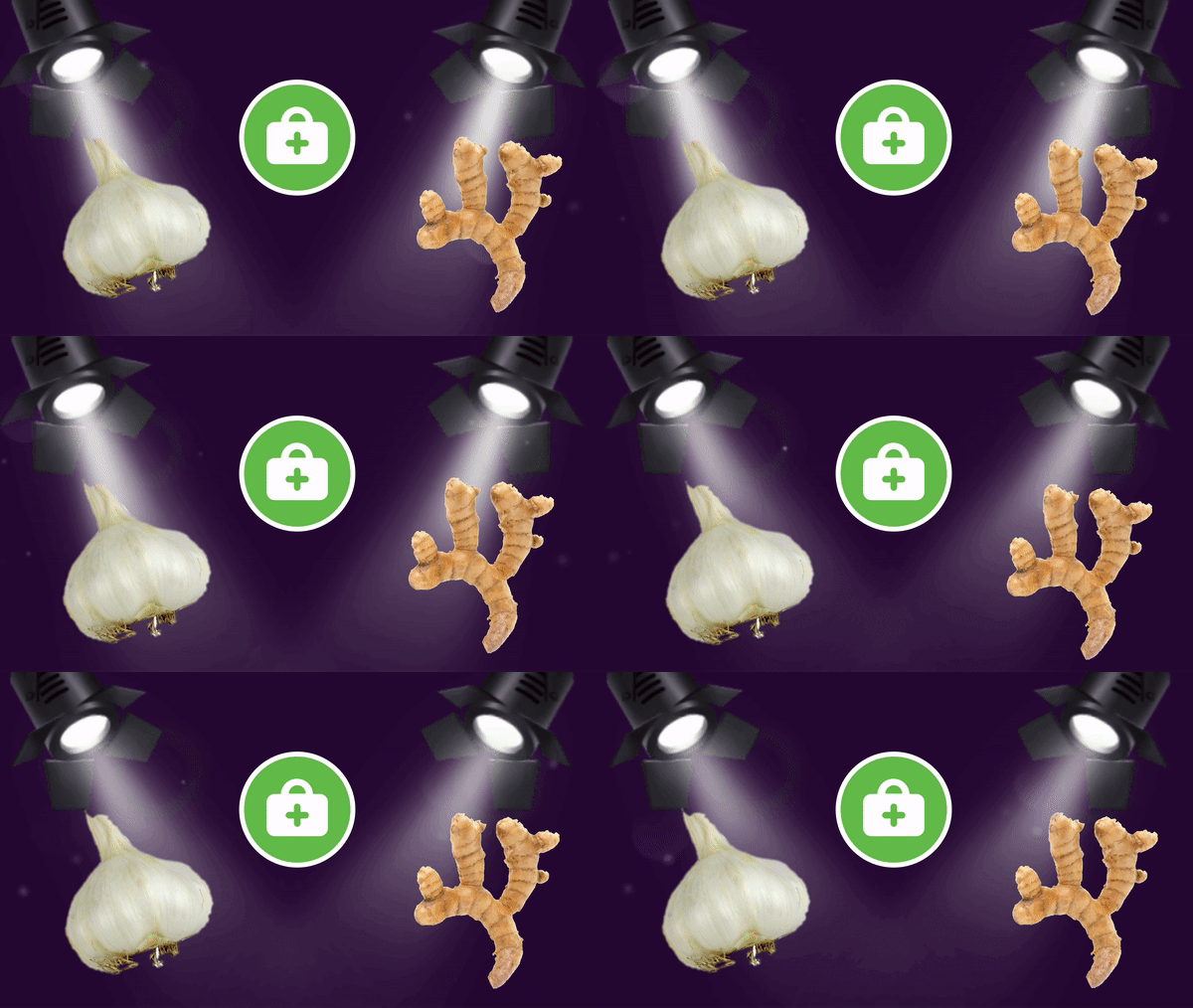
Garlic, generally believed to have originated somewhere in Middle Asia, was used as herbal medicine as far back as 2600 BC by the Sumerians. Its long history means it is universally known across cultures for its healing properties. It became known as Russian Penicillin during World War II because even though penicillin was already in use, the Russian Red army continued using it as a natural antibiotic.
Allicin, the principal phytonutrient in garlic is responsible for the antimicrobial and anti inflammatory properties that help in wound healing. \xa0But topical applications aside, it is also a superfood for many reasons.\xa0 According to this study from the US National Library of Medicine:
The proven anti-oxidative, hypocholesterolemic, anti-thrombotic and anti-hypertensive properties of garlic help in the prevention of cardiovascular and cerebrovascular diseases, and lessen the risk of development of dementia and Alzheimer's disease.\xa0\xa0\xa0 \xa0
In plain English, that means garlic prevents damage to cells by free radicals (anti-oxidative), lowers bad cholesterol (hypocholesterolemic) and high blood pressure (anti-hypertensive) and reduces blood clots (anti-thrombotic).\xa0 Pretty cool, eh?\xa0 It also has anti-carcinogenic properties.
Turmeric, the golden yellow cousin of ginger, is also a superfood well-known in Indian and Chinese medicine. The yellow in curry powder that we use to make Indian-style curries is from ground turmeric.\xa0 Curcumin, the yellow pigment, is a phytonutrient that:
\u201c\u2026 has been linked with anti-oxidant, anti-inflammatory, anti-proliferative, anti-diabetic, anti- cancer, anti-viral, and anti-Rheumatic effects.\u201d[8]
Anti-proliferative is the suppression of malignant cell growth.\xa0\xa0\xa0
Applied topically, turmeric reduces pain, inflammation and promotes faster wound healing.
How to use
Garlic and Turmeric - apply as a poultice.\xa0 For garlic and turmeric, peel first, smash or mince and apply directly to wound.\xa0 You can also mix with a bit of water to make it more like a paste and wrap a bandage around it. \xa0If you only have turmeric powder, you will need to make a paste first.\xa0 For cuts and scrapes only; do not use on burns.
Note: curry powder is a spice blend which may include turmeric and garlic, but because of the unknown impact of other ingredients in the mix, it should not be used for first aid.
Broadleaf plantain and Moringa- apply as a poultice.\xa0 Wash leaves, mash to make into a paste/poultice, then apply directly to cut or burn.\xa0 While it may be easier to use a pestle and mortal to mash the leaves, chewing provides maximum efficacy as saliva also stimulates wound-healingHoney- apply directly to cut or burn.
Aloe Vera- cut a leaf and peel to access the gelatinous surface and apply directly to cut or burn.
Tomato- slice and apply directly to burn. \xa0
Notes:\xa0 Broadleaf plantain, moringa, honey and aloe vera can be used topically for both cuts and burns. Data for turmeric or garlic use on burns is either insufficient or suggests that it is not advisable. While data is scant for tomato\u2019s efficacy on burns, my personal experience and much anecdotal evidence suggests otherwise.\xa0 Not only is it good as first aid for burns, but as a superfood, its lycopene and vitamins A and C contents are proven to assist in wound healing.\xa0 \xa0\xa0 Addendum to Rule number ten: Include cuts in your first aid plan.
My personal practice: As I mentioned when discussing burn remedies in Kitchen Dangerous part 3, I often default to a home-made salve of broadleaf plantain, a common plant that grows in my yard, as first aid to all skin irritants\u2014from burns, cuts to insect bites and stings. \xa0Not having used the other remedies for cuts, I can\u2019t offer a recommendation of one over the other.\xa0 But it is always good to have alternatives in mind. You\u2019ll never know when you might need it.On a final note, \xa0the Kitchen Dangerous series might seem like a downer, discussing scary fire scenarios and kitchen accidents from cuts or burns.\xa0 I admit, it\u2019s not sexy discussing rules either.\xa0 But cooking joyfully means we are able to face our fears (in my case, it was fear of frying) and having the peace of mind that our kitchen practices are safe not only for ourselves but for those we live with.\xa0 I have averted at least one fire disaster because of information I somehow knew.\xa0 My hope is that this series can help others down the line.\xa0 The other important take away is that mistakes and accidents will happen.\xa0 That\u2019s integral to learning. But with some knowledge, not only can we minimize or keep them from becoming full blown disasters, but we\u2019ll know how to deal with them too.\xa0\xa0 \xa0
Here\u2019s a summary of Kitchen Dangerous safety rules to help you prevent and deal with fires, burns and accidents from knives and sharp objects.
Rule Number one: Keep on hand an extinguisher rated for grease and electrical fires AND a box of baking soda Rule Number two: Avoid a Fire!\xa0 Keep in mind guidelines for fire prevention
Rule number three: If a fire is small enough, try putting it out using the guidelines mentioned in rule number two.\xa0 If too large or uncontrollable, don\u2019t be a hero, call for help.
Rule number four: Learn how to Minimize Oil splatter and avoid burns when Frying
Rule number five: Always use oven mitts or pot holders whenever you handle something hot.\xa0\xa0 Rule number six: Use tongs and long-handled cooking implements to keep your hand away from heat, such as when grilling or scooping out hot food.Rule number seven: Avoid wearing clothing and accessories such as scarves, neckties, long necklaces or blouses with long flowing sleeves that can catch on pot handles or dip into hot liquids and food.
Rule number eight: Keep pot and skillet handles turned inwards. Rule number nine: Be familiar with some easy kitchen science that governs hot things.\xa0
Rule number ten: Have a first aid plan for burns and cuts; see a doctor if serious.
Rule number eleven: Follow Knife Safety Guidelines
This concludes Kitchen Dangerous.
Interested to learn more? Read companion posts on Cooking Subversive:The Kitchen Dangerous seriesPart 1: Liar, Liar Pans on Fire: Fire and All Things HotPart 2: Don\u2019t Burn Yourself Part 3: More Hot StuffPart 4: Knives and Other Sharp Things Part 5: First Aid for Cuts (and Burns)
Additional Resources:
Garlic: https://pubmed.ncbi.nlm.nih.gov/29077629/Garlic: https://www.ncbi.nlm.nih.gov/pmc/articles/PMC3249897/Moringa: https://www.ncbi.nlm.nih.gov/pmc/articles/PMC4805140/Turmeric: https://www.ncbi.nlm.nih.gov/pmc/articles/PMC5854555/Aloe Vera: https://www.ncbi.nlm.nih.gov/pmc/articles/PMC6330525/https://www.hindawi.com/journals/bmri/2015/714216/Honey\xa0: https://www.ncbi.nlm.nih.gov/pmc/articles/PMC3941901/Plantain: https://www.ncbi.nlm.nih.gov/pmc/articles/PMC5878035/https://www.sciencedirect.com/science/article/pii/S2225411016302036#bb0100Tomatoes\xa0: https://pubmed.ncbi.nlm.nih.gov/11340098/Vit C: \xa0https://medlineplus.gov/ency/article/002404.htmVit A\xa0: https://pubmed.ncbi.nlm.nih.gov/31697447/
Get full access to Cooking Subversive at cookingsubversive.substack.com/subscribe