RUBEN SALAZAR
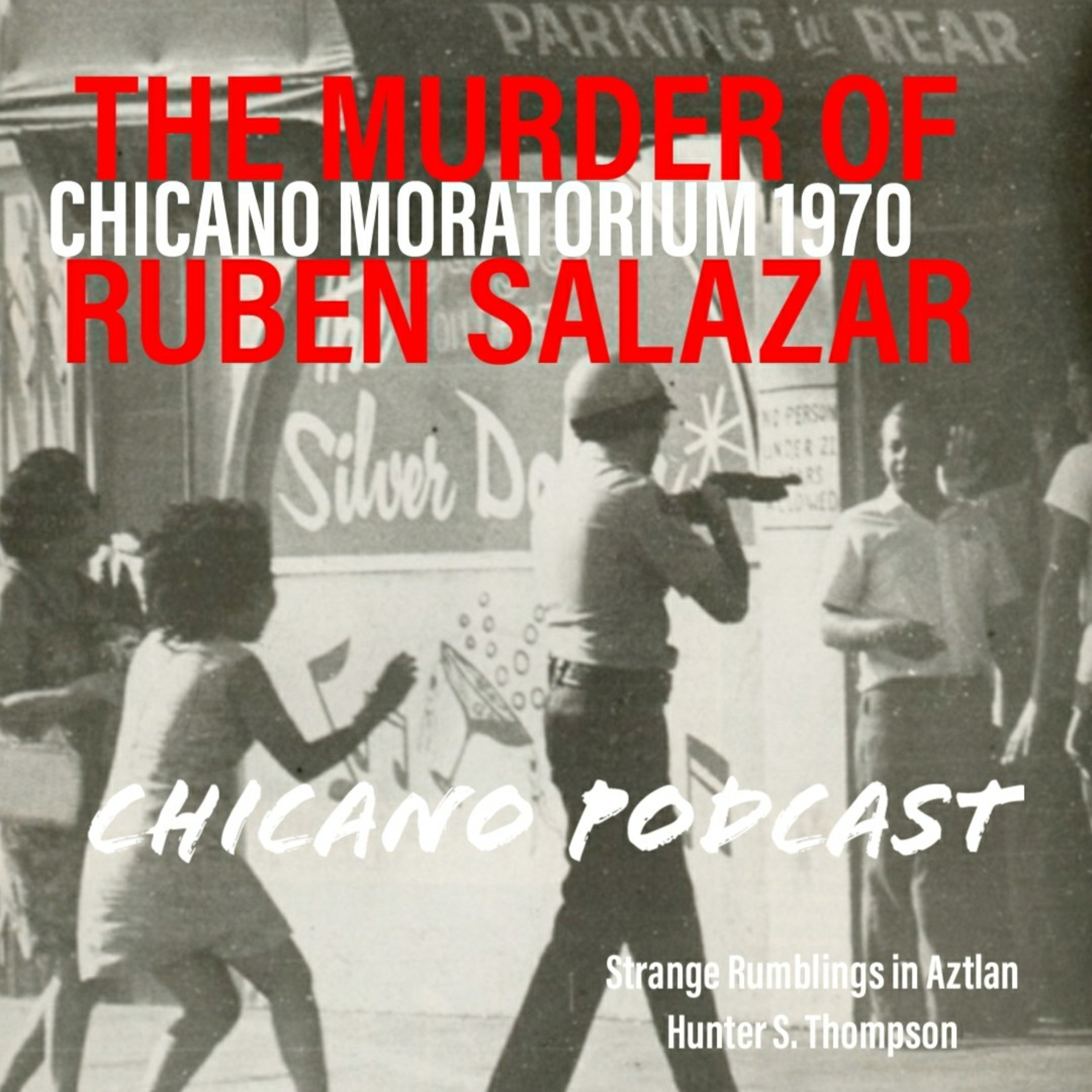
Strange Rumblings in Aztlan\n"Strange Rumblings in Aztlan" is an article published in\xa0Rolling Stone\xa0#81, dated April 29, 1971, and written by\xa0Hunter S. Thompson.\nThe article takes its title from the name\xa0Aztl\xe1n, referring to the "conquered territories" of Mexico that came under United States control after the\xa0Mexican\u2013American War. The territory covered parts of modern-day\xa0Texas,\xa0Arizona,\xa0New Mexico, and\xa0California.\nThe subject of the article is primarily the events and atmosphere surrounding the reaction of the\xa0Chicano\xa0community in Los Angeles to the killing of\xa0Rub\xe9n Salazar\xa0on August 29, 1970, the day of the historic\xa0National Chicano Moratorium\xa0march and rally against the\xa0Vietnam War. Salazar was covering the day's events as a columnist for the\xa0Los Angeles Times\xa0and news director of Los Angeles Spanish-language station\xa0KMEX-TV. After the conclusion of the march, while sipping a beer at the counter of the Silver Dollar Cafe, Salazar was hit in the head by a\xa0tear gas\xa0shell fired by\xa0Los Angeles County\xa0sheriff's deputy\xa0Tom Wilson. The day's almost entirely nonviolent nature had turned suddenly violent due to the decision of police to clear Laguna Park (now renamed\xa0Ruben F. Salazar Park) of the 20,000 to 30,000 people attending a post-march rally.\nThough marginally involved in the nascent Chicano civil rights movement of the time, Salazar became a martyr to the community when the details surrounding his death became public. Thompson's report on the situation focuses largely on this history of the violence and repression that haunted the\xa0barrio\xa0neighborhoods of Los Angeles during this period. The article lays out a timeline of events preceding and following Salazar's death. Of primary concern is the reaction of the sheriff's department and what many saw as a cover-up for a deliberate murder. Over the course of the reporting it becomes increasingly clear that the official stories offered to explain the shooting contradict eyewitness, and eventually, previous 'official' versions of the event.\nThe article is also of note for the appearance of\xa0Oscar Zeta Acosta, an acquaintance and "sometimes antagonist" of Thompson's at the time. It was during his reporting for the Salazar story that Thompson and Acosta took a road trip to\xa0Las Vegas\xa0in order to escape the pressure of Los Angeles and to find a place where Acosta could discuss the case openly, without fear of retaliation from either the police or Chicanos who might see him as cooperating with\xa0the Establishment. The road trip to Vegas became the basis for Thompson's book\xa0Fear and Loathing in Las Vegas, with Acosta serving as the inspiration for the novel's Dr. Gonzo.[1]