With but two years of service in the RNMP Philip Raine finds himself somewhat unwillingly on the trail of Bram Johnson, wanted for murder and a wild, untamed and savage man who commands a pack of wolves as his brethren.
But most peculiar of all is the snare which Bram had had in his posession and had somehow lost. It was a golden snare intricately woven out of the finest, most delicate flaxen hair of a woman. But what could possibly be the relationship between this half-human murderer and a woman who could have borne a crown of such beauty and elegance? The mystery of Bram Johnson and his wolves and the golden snare becomes one which Raine feels compelled to unravel even as he pursues the wild man and his pack among his own territory of the Canadian barren lands.
(Summary by Roger Melin)
26 episodes
"The Fair Rewards" by Thomas Beer . . . is a really distiguished novel. The writing is far above the average: it has style and sophistication and personality, intermingled with a truly vivid show of imagination. It even borders on brilliancy, but it is a hard, cold, cynical sort of brilliancy that chills. It almost hurts . . . The title itself is indicative of cynicism. It is derived from Shakespeare's quotation, "These be the fair rewards of those that love," and it is an ironical reference, for Mark Walling, the blind, simple, loving idolater, in return for his great and unselfish devotion to Margot, reaps selfishness and ingratitude and lack of consideration. Hand in hand with the progress of Mark from country yokel to a stage producer goes the history of the American theatre. Intermingled with the imaginary characters are Clyde Fitch, Anna Held, Mr. Frohman and several other flesh-and-blood personages that strengthen the realism. (New York Times review, June 4, 1922)
11 episodes
In this collection of Russian stories, editor and compiler Thomas Seltzer selects from a range of the best examples of 19th and early 20th century Russian literature. As a survey of famous authors at the height of the powers, as well as some writers who have been unjustly neglected, this anthology is indispensable. (Summary by Nullifidian)
"Everything is subordinated to two main requirements--humanitarian ideals and fidelity to life. This is the secret of the marvellous simplicity of Russian literary art."--THOMAS SELTZER.
23 episodes
The story is set in Padua in a distant, but unspecified past. From his quarters, Giovanni, a young student of letters, observes Beatrice, the beautiful daughter of Dr. Rappaccini, a scientist working in isolation. Beatrice is confined to the lush and locked gardens filled with poisonous plants by her father. Having fallen in love, Giovanni enters the garden and meets with Beatrice a number of times regardless of the warning of his mentor, Professor Baglioni, that Rappaccini is up to no good and he and his work should be avoided. -- Wikipedia.
3 episodes
Dr. David Throckmartin’s scientific expedition to the South Sea Islands discovers among ancient ruins a portal into Muria, an unknown underground world. After the disappearance of Throckmartin, his wife and two companions, his old friend Dr. Walter Goodwin enters Muria with a rescue party, only to confront an fantastic world filled with incredible beings, astounding scientific advances, and the worship of the most evil of all creatures, The Dweller. (Introduction by Mark Nelson)
35 episodes
The story starts with a comet that touches the Earth in its flight and collects a few small chunks of it. Some forty people of various nations and ages are condemned to a two-year-long journey on the comet. They form a mini-society and cope with the hostile environment of the comet (mostly the cold). The size of the 'comet' is about 2300 kilometers in diameter - far larger than any comet or asteroid that actually exists. (Summary by Wikipedia)
43 episodes
A 1908 NaNoWriMo forerunner, told in twelve chapters, each with a different author. The basic plot was to show how an engagement or marriage would affect and be affected by an entire family. The project became somewhat curious for the way the authors' contentious interrelationships mirrored the sometimes dysfunctional family they described in their chapters. The collaboration may have been an uncomfortable one, but a final product did emerge with some clever and entertaining contributions from its often squabbling authors. (Summary adapted from Wikipedia and others by Annise)
12 episodes
The novel details the lives of three characters, first as children and then as adults - Waldo, Em and Lyndall - who live on a farm in the Karoo region of South Africa. The story is set in the middle- to late Nineteenth century - the First Boer War is alluded to, but not mentioned by name. The book is semi-autobiographical: in particular, the two principal protagonists (Waldo and Lyndall) display strong similarities to Schreiner's life and philosophy.
The book was first published in 1883 in London, under the pseudonym Ralph Iron. It quickly became a best-seller, despite causing some controversy over its frank portrayal of freethought, feminism, premarital sex and pregnancy out of wedlock and transvestitism. (Introduction by Wikipedia)
28 episodes
Resurrection is the last of Tolstoy's major fiction works published in his lifetime. Tolstoy intended the novel as an exposition of injustice of man-made laws and the hypocrisy of institutionalized church. It was first published serially in the magazine Niva as an effort to raise funds for the resettlement of the Dukhobors. The story concerns a nobleman named Nekhlyudov, who seeks redemption for a sin committed years earlier. His brief affair with a maid resulted in her being fired and ending up in prostitution. The book treats his attempts to help her out of her current misery, but also focuses on his personal mental and moral struggle.(Summary from Wikipedia)
28 episodes
Eine märchenhafte Geisternovelle.
Zur Konfirmation hat Franz Arbogast, an einem Ostersonntag geboren, ein geheimnisvolles Büchlein mit Lebensregeln für Osterkinder bekommen. Jahre später ist er als Goldschmiedsgeselle unterwegs, um kostbare Steine für einen Krone einzukaufen, doch all sein Geld wird ihm auf rätselhafte Weise gestohlen. Noch rätselhafter aber ist, dass sein Büchlein den Verlust voraussagt und ihm rät, dem Verlorenen nicht hinterher zu jagen, da er es bald von selbst wiederfinden wird. Franz bleibt also in der Gegend und kommt zu einem Schloss, bei dem der Sage nach ein Geist sein Wesen treibt, der nur von einem Osterkind erlöst werden kann. Er findet bei den Verwaltern des Schlosses gastliche Aufnahme, und es begegnen ihm hier ganz wundersame Dinge.
(Zusammenfassung von Hokuspokus)
7 episodes
This is the classic story of William Tell - Swiss patriot and great apple-shooter - as seen through the eyes of English humorist P.G. Wodehouse.
No Swiss were (permanently) injured in the telling of this story; however, results differed for Austrian tyrants.
The original volume also included a humorous poem encapsulating the whole Tell legend, written by John W. Houghton to accompany the sixteen color illustrations. For this audiobook, the stanzas have been collected and read as a single poem. (Introduction by Mark F. Smith)
8 episodes

The Gilded Age: A Tale of Today is an 1873 novel by Mark Twain and Charles Dudley Warner that satirizes greed and political corruption in post-Civil War America. The term gilded age, commonly given to the era, comes from the title of this book. Twain and Warner got the name from Shakespeare's King John (1595): "To gild refined gold, to paint the lily... is wasteful and ridiculous excess." Gilding a lily, which is already beautiful and not in need of further adornment, is excessive and wasteful, characteristics of the age Twain and Warner wrote about in their novel. Another interpretation of the title, of course, is the contrast between an ideal "Golden Age," and a less worthy "Gilded Age," as gilding is only a thin layer of gold over baser metal, so the title now takes on a pejorative meaning as to the novel's time, events and people.
Although not one of Twain's more well-known works, it has appeared in more than 100 editions since its original publication in 1873. Twain and Warner originally had planned to issue the novel with illustrations by Thomas Nast. The book is remarkable for two reasons–-it is the only novel Twain wrote with a collaborator, and its title very quickly became synonymous with graft, materialism, and corruption in public life. (Description by Wikipedia)
64 episodes
After his father’s death Gerard Roylake returns from Germany to take up his inheritance at Trimley Deen. On one evening he meets his childhood friend, Cristel Toller. They fall in love, but there is a crux. A deaf man, called The Lodger is obsessed with Cristel. He invites Gerard to tea with evil intentions… and Gerard accepts the invitation.The book is written in the first person and tells the story from Gerard's point of view. (Summary by Diana Majlinger)Additional proof-listening by Betty M.
18 episodes
This is the story of a voyage of a merchant sailing ship from Bombay to England, set in the very late 19th century. “It was a bad winter off the Cape that year.” From Wikepedia: “The novel is seen as an allegory about isolation and solidarity, the ship's company serving as a microcosm of a social group.” As to the title, one can only ask, “What WERE you thinking?” (Introduction by Tom Crawford)
14 episodes

The Betrothed (I Promessi Sposi) presents a kaleidoscope of individual stories, which are all tied together by the story of Lucia and Renzo, two young persons of humble origin that are deeply in love with one another. However, despite their great attachment, they are prevented from marrying by the cruel Don Rodrigo, who has himself cast an eye on the beautiful and pious Lucia. Don Rodrigo menaces the priest who was to perform the wedding ceremony, who then refuses to do his duty. Thus threatened and prevented from being married, the couple is separated, and the narration follows each of them on their struggle to unite again.
Set in the years 1628-1630, the main story is accompanied by a rich and most accurate description of the historical background -- the warfaring cities, the plague, and the oppressive Spanish rule over Northern Italy during that time. The narration also includes many smaller subplots which allow the reader glimpses into the lives of the other characters involved.
Alessandro Manzoni is regarded as one of the most important authors of Italian literature, and this particular work is counted to the overall most important literary works of the 19th century.
78 episodes
Aurora Floyd, the daughter of a rich banker and an actress, could not have had a better start: back from a finishing school in Paris, she is beautiful, clever and rich. Two men instantly fall in love with her. But when they discover that she have done something very wrong in her past, who will stand by her side? With a set of unforgettable characters, the author delivers to us what she calls "a domestic drama". This book asks some major questions: is it good to love someone even if they lied? Even if they were amoral and behaved very badly? Is it good to forgive everything? Those questions are timeless, and so is this book. (Summary by Stav Nisser)
40 episodes
Athelstan King is a British Secret Agent stationed in India at the beginning of WWI. He is attached to the Khyber Rifles regiment as a cover, but his real job is to prevent a holy war. "To stop a holy war single-handed would be rather like stopping the wind--possibly easy enough, if one knew the way." King is ordered to work with a mysterious and powerful Eastern woman, Yasmini. Can King afford to trust her? Can he afford not to? Introduction by Brett W. Downey
18 episodes
Akakij Akakijewitsch ist mit Leib und Seele Beamter, genauer gesagt: Kopist. Der Beruf des Abschreibens füllt sein ganzes Leben aus. Er ist davon so begeistert, dass er sogar Lieblingsbuchstaben hat. Sein Leben ändert sich erst, als er beschließt, sich einen neuen Mantel zu leisten. Der Mantel verwandelt Akakij Akakijewitsch sowohl äußerlich wie auch innerlich. (Introduction by Al-Kadi and Wikipedia)
3 episodes

This is not a children's book, as may be supposed from the title, but a collection of essays first published in The Idler magazine, in which over twenty well-known authors write with characteristic style and humour of their experiences in writing their first book... and getting it published.Authors include Jerome K. Jerome, R. L. Stevenson, Bret Harte, Rider Haggard, Rudyard Kipling, Conan Doyle and Mary Braddon. Full of charm, humour and pathos, this book is like a fireside chat with great writers of the past, as well as being a fascinating insight into the literary scene of the late 19th century.The listener is warned that a few of the authors give away the ending of their book, especially when they were pressurised into changing it by the publisher..Here are links to online texts of the works discussed, where available: Ready-Money Mortiboy;
The Family Scapegrace;
The Wreck of the ‘Grosvenor’;
Physiological Aesthetics;
Philistia;
The Shadow of a Crime;
Departmental Ditties;
The Trail of the Serpent;
The House of Elmore;
Dawn;
Hudson Bay;
The Premier and the Painter;
The Western Avernus;
A Life’s Atonement;
A Romance of Two Worlds;
On the Stage and Off;
Cavalry Life;
Dead Man’s Rock;
Undertones;
Idyls and Legends of Inverburn;
Treasure Island
(Summary by Ruth Golding)
23 episodes
Lucy Maud Montgomery was born at Clifton (now New London), Prince Edward Island, Canada, on November 30, 1874. She achieved international fame in her lifetime, putting Prince Edward Island and Canada on the world literary map. Best known for her "Anne of Green Gables" books, she was also a prolific writer of short stories and poetry. She published some 500 short stories and poems and twenty novels before her death in 1942. The Project Gutenberg collection of her short stories was gathered from numerous sources and is presented in chronological publishing order. (Summary by Project Gutenberg.)Lucy Maud Montgomery Short Stories, 1896 to 1901Lucy Maud Montgomery Short Stories, 1902 to 1903Lucy Maud Montgomery Short Stories, 1904Lucy Maud Montgomery Short Stories, 1905 to 1906Lucy Maud Montgomery Short Stories, 1907 to 1908Lucy Maud Montgomery Short Stories, 1909 to 1922
20 episodes
French colonists on a planet ruled by reptiles and amphibians are forced to wear living “skins” that subdue aggression and enforce vegetarianism. As children, Rastignac and his reptile friend Mapfarity force themselves to become carnivores and begin a protein fueled journey that causes Rastignac to develop a Philosophy of Violence. When a spaceship from Earth crashes in the ocean, Rastignac and company must put their philosophy to the test. - Rastignac The Devil was first published in the May 1954 issue of Fantastic Universe Magazine. (Summary by Gregg Margarite)
2 episodes
Penrod for girls in the form of Florence, the bratty younger cousin of luminous Julia Atwater, enlivens this romantic comedy set in Tarkington's Indiana of the early 20th Century. (Summary by BellonaTimes)
23 episodes
"Der Großinquisitor" ist eine Erzählung aus dem Roman "Die Brüder Karamasow". Die Handlung spielt im 16. Jahrhundert, in Sevilla. Jesus, auf die Erde zurückgekehrt, wird von einem greisen Großinquisitor verhaftet und soll auf dem Scheiterhaufen verbrannt werden. (Introduction by Al-Kadi)
2 episodes
This is a collection of the following short stories: The Ninth Vibration -- The Interpreter : A Romance of the East -- The Incomparable Lady : A Story of China with a Moral -- The Hatred of the Queen : A Story of Burma -- Fire of Beauty -- The Building of the Taj Majal -- How Great is the Glory of Kwannon! -- The Round-Faced Beauty. Many of them are romantic, some of them are fantasy and others are occult fiction.(Introduction by Linda Andrus)
13 episodes
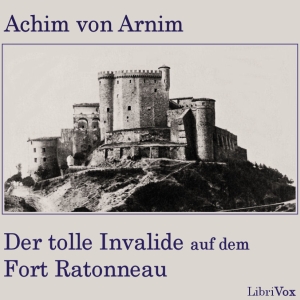
Die Geschichte einer deutsch-französischen Liebesverbindung, die nach schwerstem Missverständnis in Harmonie ausgeht.
Auf dem Höhepunkt des Konfliktes bedroht der Mann, – Franzose, Kommandant einer Festung, – in der Verblendung des Irrtums eine ganze Stadt mit Waffen- und Bombenterror. Aber der unbeirrten Liebe seiner deutschen Frau gelingt es, den Konflikt aufzulösen.
„Gnade löst den Fluch der Sünde,
Liebe treibt den Teufel aus.“
(Zusammenfassung von Rolf Kaiser)
2 episodes
While "The Battle of Life" is one of Charles Dickens' Christmas Books - his annual release of a story just before Christmas - this one breaks the tradition by not being concerned with Christmas. Rather, its subtitle, "A Love Story", reveals more of the plot. The major events of this book take place on land that once was a battleground. That is just a backdrop for Dickens' idea of the real battle of life - finding and winning the right partner, so that life will go on to the next generation. The family that lives there is rather confused in its affections and intentions regarding who should end up with whom. We are thrust into the fight to make things work out, and, happily for a Christmas book, Dickens leads us on to a happy ending. (Summary by Mark F. Smith)
7 episodes
Elizabeth Stuart Phelps's 1877 novel is set in a New England college town, and focuses on Avis Dobell, a professor's daughter. Avis is a talented painter, and bucks against the constraints placed on women in the 19th century. She wants to pursue a career as an artist and rejects marriage and motherhood, until she meets the charismatic young professor Philip Ostrander. Phelps's novel is a beautifully-written examination of the conflicts between marriage and career for women that is still relevant today. (Summary by Elizabeth Klett)
25 episodes
Follow the adventures of Katy Carr and her family, through good times and bad. (Summary by Karen Savage)
13 episodes
Ein Sittengemälde aus dem gebirgigen Westfalen.
Banden, die Forstdiebstahl im großen Stil betreiben, von allen Mitwissern gedeckt; korrupte Unternehmer; machtlose Polizei, machtlose Obrigkeit; Alkoholismus; christliche Engstirnigkeit, volkstümlicher Aberglaube; verleugnete Vaterschaft; Jugendliche sind unausweichlich Mittäter und Komplizen, ohne andere Perspektive; Mord an einem Forstbeamten, von Mitwissern gedeckt; Judenhass; Überschuldung; Mord an einem Juden, der Geld verleiht; aus Verzweiflung Flucht ins Ausland; Versklavung im Orient. Selbstmord.
Alle Fragen bleiben offen, keine Tat wird aufgeklärt.
(Summary by Rolf Kaiser)
5 episodes
The plot concerns two – literally starcrossed – lovers: Swithin St. Cleeve, a very young amateur astronomer, and Viviette Constantine, an unhappily married and abandoned woman 8 or 9 years his senior. Each night Swithin climbs the old tower of the title, in the grounds of the Constantine estate. Lady Constantine, whose husband has been absent some years on an extended hunting and exploring journey to Africa, joins the young man in his stargazing, and supports his astronomical ambitions by buying him equipment, though his dreams of scientific renown are disappointed. Their relationship then deepens and takes several twists and turns.(Summary by Tadhg)
42 episodes
Madame Butterfly is the story of the young Japanese girl Cho-Cho San, who marries a flighty American naval officer, and is thenceforth outcast from her relatives. Anxiously she awaits the return of her beloved husband, but when he finally anchors in the harbour, Cho-Cho San does not get the happy ending she was hoping for.
This short story by John Luther Long has inspired Giacomo Puccini to write the opera of the same name. (Introduction by Availle)
5 episodes
These are a collection of humorous "letters" written by a fictional character to a relation in the north during the Civil War. They were published regularly in the New York Mercury Sunday newspaper for the four years of the war. In the letters, Newell pokes fun at northern generals, politicians, and has hard things to say about southerners. Although Newell is rarely serious, I imagine the letters reflect the bitterness and frustration of many northerners at the time. (Introduction by Margaret)
52 episodes
These lesser known stories were penned by Conan Doyle during the period between killing off Sherlock Holmes in 1893 and reluctantly resurrecting him some ten years later. The swashbuckling, eponymous hero, Etienne Gerard, is one of Napoleon's gallant French Hussars, who considers himself the finest of them all. Through these "Boys Own Adventures", Conan Doyle pokes gentle fun at both the French and the English. This is the second volume containing eight adventures. (Summary by Phil)
25 episodes
Rachel Minchin stands in the dock, accused of murdering the dissolute husband she was preparing to leave. The trial is sensational, and public opinion vehemently and almost universally against her. When the jury astonishes and outrages the world with a vedict of Not Guilty, Rachel quickly finds herself in need of protection. It comes in the form of a surprising offer of marriage from a mysterious stranger who has sat through every day of her trial. The marriage to this intriguing stranger, Mr. Steel, is by mutual agreement to be a platonic one, the only condition of which is that neither is ever to question the other about the past. The two travel to Steel’s remote country estate, where Rachel accidentally discovers that her second husband’s past was somehow intertwined with her first husband’s history – but how, exactly, and why he determined to marry her, Steel will not say. As her doubts about her husband increase, local busybodies threaten to unearth Rachel’s own past. And that is the least of the secrets that comes to light as this entertaining mystery unfolds. (Introduction by Christine Dufour)
28 episodes
A Sicilian Romance is a Gothic novel by Ann Radcliffe. It was her second published work, and was first published anonymously in 1790. The plot concerns the turbulent history of the fallen aristocrats of the house of Mazzini, on the northern shore of Sicily, as related by a tourist who becomes intrigued by the stories of a monk he meets in the ruins of their doomed castle.The introduction to the 'Worlds Classics' edition notes that in this novel "Ann Radcliffe began to forge the unique mixture of the psychology of terror and poetic description that would make her the great exemplar of the Gothic novel, and the idol of the Romantics". The novel explores the "cavernous landscapes and labyrinthine passages of Sicily's castles and convents to reveal the shameful secrets of its all-powerful aristocracy" (Summary from Wikipedia)
16 episodes
Under the Andes was written by Rex Stout years before his creation of the immensely popular Nero Wolfe series of novels, and while perhaps his future writing style is still blossoming, certainly his knack for weaving a fantastic tale of mystery and adventure will have most readers anxious for the next phase of adventure at every turn.
The story finds two brothers and a pretty female companion on a journey which eventually takes them to a series of underground caves under the Andes of South America, where they encounter a lost tribe of Incas who have apparently survived hundreds of years oblivious of the outside world. The apparent 'king' of the tribe has become infatuated with the fair-skinned female intruder of the group and, well, suffice it to say there's a lot of action, attempted escapes, heroism, and peculiar interactions between all, reminiscent of H. Rider Haggard with a touch of Edgar Rice Burroughs. (Summary by Roger Melin)
24 episodes
18 works -- two non-fic articles & one short fiction or poetry each -- from issues March, April, May, June, July, & August 1906 of The Scrap Book, Volume 1, edited by Frank Munsey. As he states in the editorial of the April 1906 issue (Vol 1, Iss 2) this was a sort of supplement to the editor's popular monthly, Munsey's Magazine http://en.wikipedia.org/wiki/Munsey's_Magazine. The Scrap Book is very like an American version of Punch with many short, often humorous articles interspersed with at least one short story, some poetry, and several longer non-fic pieces. The Scrap Book ran up to 1912.(Summary by BellonaTimes)
18 episodes
O nome do autor é ocasionalmente grafado como Dostoievsky – foi um escritor russo, considerado um dos maiores romancistas da literatura russa e um dos mais inovadores artistas de todos os tempos.Nesta obra, que lembra uma peça de teatro, é feita uma sátira à hipocrisia das relações sociais na "sociedade" de Mordassov, e às personagens dessa sociedade que se baseiam em intrigas e mentiras para sustentar o seu nível social.Publicada em português em 1908. (Resumo adaptado da Wikipédia por Vicente)
15 episodes

Doctor Thorne is the third of Trollope's Barsetshire novels, and unlike some of the others, has little to do with the politics and personalities of the Church of England, or politics on the national level (though there is lots of politicking in the mythical county of Barsetshire itself). The plot revolves around the illegitimate Mary Thorne, who has been lovingly raised by her uncle, a country doctor, and who, as she comes of age, finds herself wondering whether she is a lady (in the county sense of the term). Frank Gresham, son of the squire of Greshamsbury, is in love with her (much against the wishes of his noble de Courcy relatives at the Castle), but she dismisses his affection at first as mere puppy love, thereby setting the scene for a series of entanglements, social, romantic, and of course, financial and propertied (never far from the action in Trollope's works). Their resolution, of course, makes up the meat of the novel. One critic has remarked that in Doctor Thorne Trollope succeeds in one of the most difficult tasks an author of fiction can face: how to make genuinely good people genuinely interesting, so that they engage not only the sympathies but also the interest of readers. (Introduction by Nicholas Clifford)
47 episodes

Shipwrecked and castaway, Daniel DeFoe’s hard-luck character is still the standard for “growing where you’re planted.” Captured by pirates, he makes his break in a small boat and undergoes desperate adventures before winning his way back to civilization. But Crusoe proves willing to chance his luck a second time when, after sweating his way to prosperity as a planter in Brazil, he undertakes a voyage that isn’t needful… and is marooned on a small island off South America.Crusoe shows the value of single-minded labor as he pursues ways to feed, shelter, and clothe himself. His ardent wish is to escape his island – why is it that the only people who come there are cannibals? But he spends more than two decades in isolation before acquiring a sidekick – the man Friday you’ve probably heard of. And who would guess his way to salvation would depend on leading a last-ditch fight against a shipful of mutineers?For other castaway stories inspired by “Robinson Crusoe”, listen to “The Swiss Family Robinson” (http://snipurl.com/swiss_family) and “The Mysterious Island” (http://snipurl.com/mysterious_island). (Summary by Mark F. Smith)
22 episodes
When I first started reading this book, I thought it to be a historical romance novel. As I read further, I pondered whether it might be a sea-faring story. Reading still further, I determined it to be an adventure story. Alas, it is all three. To Have And To Hold, written by Mary Johnston was the bestselling novel of 1900. The story takes place in colonial Jamestown during the 1600
39 episodes
Sherlock Holmes, a fictional character of the late 19th and early 20th century created by Scottish author and physician Sir Arthur Conan Doyle, is a brilliant London-based "consulting detective" famous for his intellectual prowess and renowned for his enormous scope of observation, his astute logical reasoning and forensic science skills in solving difficult crimes. The Memoirs of Sherlock Holmes is a collection of Sherlock Holmes mysteries, including The Final Problem in which Holmes confronts his arch-nemesis Professor Moriarty, originally published in 1894, which are preceded by The Adventures of Sherlock Holmes and followed by The Hound of the Baskervilles. (Adapted from Wikipedia)
11 episodes

"A novel, with several elements of rather unusual interest. As a tale, it is swift, simple, and absorbing, and one does not willingly put it down until it is finished. It has to do with grain-elevator business, with railways, strikes, and commercial and financial matters generally, woven skilfully into a human story of love." --The Commercial Advertiser"'Calumet "K"' is a novel that is exciting and absorbing, but not the least bit sensational. It is the story of a rush.... The book is an unusually good story; one that shows the inner workings of the labor union, and portrays men who are the bone and sinew of the earth."--The Toledo Blade. "The heroine in this case is the hero's stenographer; but the action of the story grows out of the attempt of rival capitalists and grain men to balk the building of a grain elevator by a set date." --The Burlington Free Press(Excerpts from the advertising material at the end of "The Merry Anne" by Samuel Merwin)
Note: This book contains racial comments that may be offensive to modern listeners.
17 episodes
Six poignant short stories reminiscent of life as a transport rider in the Transvaal veld in the days of the gold rush in South Africa at the end of the 19th century. From an early age Fitzpatrick believed that life should be enjoyed to the full and his honest and often moving style of writing leaves one richer for having known him. (Summary by SallyMc)
6 episodes
Carroll Watson Rankin's best known novel is Dandelion Cottage, published in 1904 by Henry Holt and Company. She first wrote the story serially for her own children. Considered a regional classic in the midwest, it tells of four young girls who negotiate the use of a derelict cottage as a playhouse by pulling dandelions for the owner, prosperous Mr. Black. The real life model for Mr. Black is generally acknowledged to be Marquette businessman and philanthropist, Peter White. The original Dandelion Cottage is located at 440 East Arch and is privately owned. (Summary from Wikipedia)
21 episodes
When Beale and Ida Farange are divorced, the court decrees that their only child, the very young Maisie, will shuttle back and forth between them, spending six months of the year with each. The parents are immoral and frivolous, and they use Maisie to intensify their hatred of each other. (Summary by Wikipedia.)
32 episodes
The Man Who Laughs is a novel by Victor Hugo, originally published in April 1869 under the French title L'Homme qui rit. Also published under the title "By Order of the King". (Introduction by Wikipedia)
104 episodes
In LibriVox’s Multilingual Fairy Tale Collection, LibriVox volunteers read their favourite public-domain fairy tales. This is a collection of 20 fairy tales in 6 languages recorded by a variety of LibriVox members.
20 episodes

Clearly frustrated at the refusal of his contemporaries to recognise the iniquity of society, Tressell's cast of hypocritical Christians, exploitative capitalists and corrupt councillors provide a backdrop for his main target — the workers who think that a better life is "not for the likes of them". Hence the title of the book; Tressell paints the workers as "philanthropists" who throw themselves into back-breaking work for poverty wages in order to generate profit for their masters.
The hero of the book, Frank Owen, is a socialist who believes that the capitalist system is the real source of the poverty he sees all around him. In vain he tries to convince his fellow workers of his world view, but finds that their education has trained them to distrust their own thoughts and to rely on those of their "betters". Much of the book consists of conversations between Owen and the others, or more often of lectures by Owen in the face of their jeering; this was presumably based on Tressell's own experiences.(Summary by Tadhg)
69 episodes
Willie Spence may have been a bit eccentric by most standards, but he had a knack for creating gadgets in his small workshop at his home on Cape Cod. Whenever he was 'ketched' by an 'idee' he had to see it to completion, and always did. His small cottage on the Cape had become a labyrinth of string and wires tacked here and there so as to make life a bit challenging for his housekeeper Celestina. But she and most everyone else among the coastal towns and villages loved the old man for all his eccentricities as Willie spent his waning years just waiting for his ship to come in. (Summary by Roger Melin)
23 episodes