Chloe Eudaly, Candidate for Pos. 4
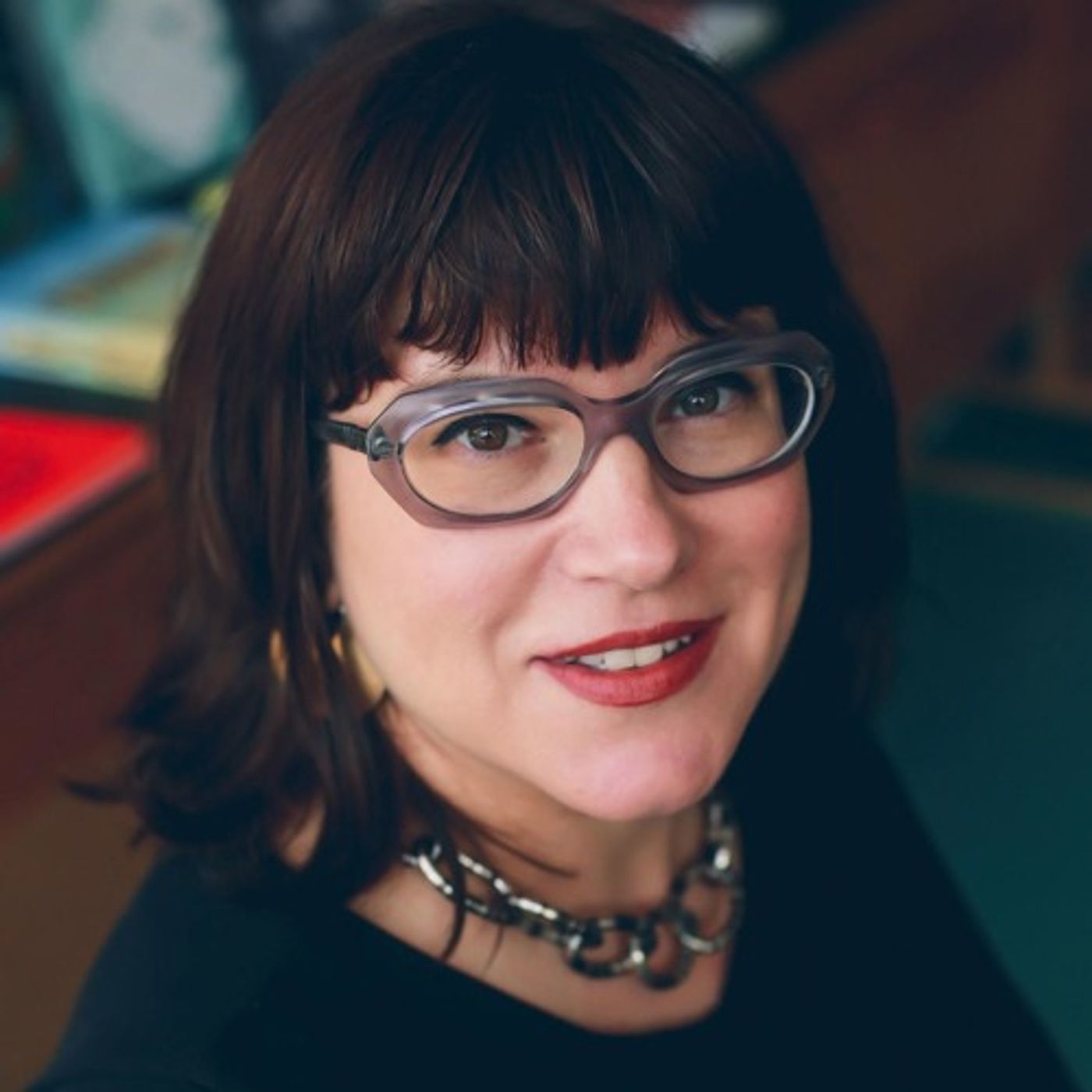
This spring we're sharing a series of candidate interviews regarding Portland's future and the arts.
City council candidate Chloe Eudaly has seen a lot change in the arts community since she opened her bookstore, Reading Frenzy, in 1994. Listen in as she catches us up on that history and gives us a peek into her vision for the future of arts and culture in Portland.
2:32 - Portland's future and how arts & culture play into it.
\u201cIf we don't have affordable housing for our low-income residents, for our workforce, for our artists and creatives, we are not going to have a vibrant cultural landscape left.\u201d
5:50 - Do you think RACC is doing a good job?
\u201cWhen I opened my bookstore in 1994, there were grants available for people like me\u2026and those dollars have by-and-large gone away\u2026I do feel that the city has really neglected this grassroots, kind of unacknowledged category of cultural workers.\u201d
07:40 - On why small scale arts institutions are important:
\u201cMy pivotal cultural experiences did not happen at well-funded arts institutions, they happened at all-ages music venues, at quirky little bookstores, at cafes that had galleries in the back.\u201d
09:00 - On how the 80\u2019s and 90s inform her current thinking about expanding arts and cultural access across Portland:
\u201cWhat was essential at the time for all of these really interesting, quirky, slightly improbable businesses\u2014like mine or like the X-Ray [Cafe]\u2014was cheap rent. Cheap relative to wages. That's really disappearing and I fear for what our cultural landscape will look like in a few years if we do nothing.\u201d
14:27 - On strategies to improve residential real estate problems in Portland:
\u201cI'd love it if the city and PDC could figure out a plan to assist with the succession of ownership within low-income families because that house is many people\u2019s most valuable asset.\u201d
23:23 - On the changes in the close-in SE industrial district:
\u201cThe tech industry doesn't need that neighborhood. I think the maker's community has a much more compelling argument for their need to stay in that area, and they are being displaced.\u201d
24:50 - Is there a creative class war developing between artists and creative tech workers? As an elected official would you try to take sides or broker a peace?
\u201cI\u2019m more concerned with preserving existing communities and creating affordable spaces than I am with accommodating people coming in with a lot of capital.\u201d
27:18 - On what can be done to ensure that public dollars in Portland are reaching everyone and not just white, middle-class audiences:
\u201cI think it\u2019s a real challenge to create equity in the arts community when we don\u2019t have it in housing, and we don\u2019t have it in schools, and people are being forced out to the edges of the city where there is little-to-no cultural programming going on.\u201d
29:00 - On the Arts Tax:
\u201cWhatever problems I might have with the tax, knowing that every kid [K-5] in Portland public schools is getting arts education goes a long way toward smoothing those concerns over.\u201d
\u201cI\u2019d like to see the exemption raised\u2026a graduated tax based on income, and I would like see more money going towards access....I do not support sending people to collections over the Arts Tax.\u201d
31:30What would you do to influence the city's built environment. Tell us about one place in the city that's an example of something to work on or something to celebrate.
"North-Northeast Portland is one of the areas most impacted by gentrification and displacement."
"I have to wonder what African-American residents have to come back to."