Baby Brainwaves and Broken Science | Jordan Lasker & Richard Hanania
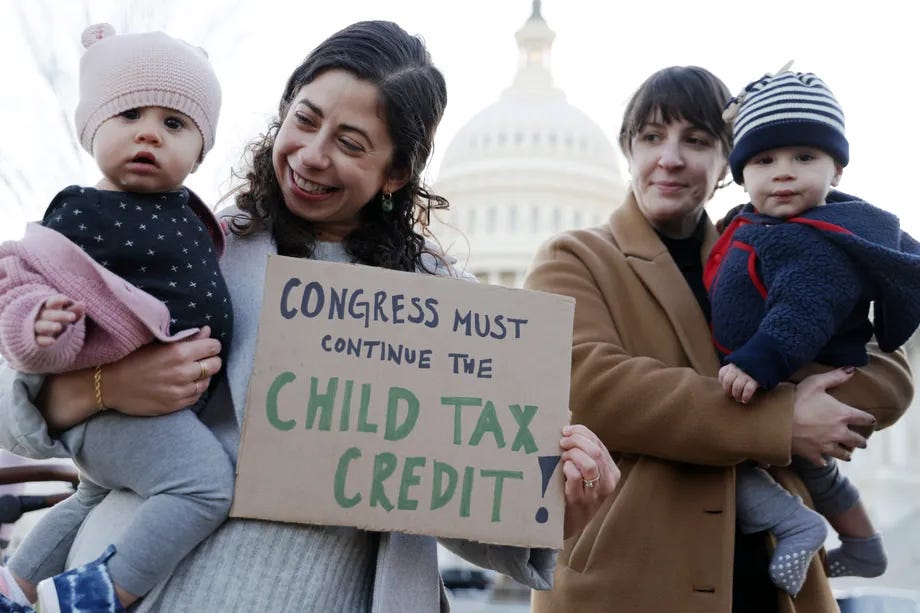
Jordan Lasker is a PhD student at Texas Tech University and a bioinformatician. He joins the podcast to discuss his recent report for CSPI, \u201cAbout Those Baby Brainwaves: Why \u2018Policy Relevant\u2019 Social Science is Mostly a Fraud.\u201d The report critically examined a recent study claiming small cash transfers to the parents of newborns improved their babies\u2019 brain activity. The study was lauded in the media and by D.C. policymakers, who argued its results supported redistributive policies, most notably the child tax credit. Jordan demonstrated that the study in question wildly overstated its claims, was methodologically suspect, and that its authors engaged in numerous bad research practices. Social science, he argues, is not a sound basis for policymaking given academia\u2019s warped incentives.
He and Richard talk about why physiological measures like EEGs are taken much more seriously than psychometrics like IQ tests, whether \u201crich brains\u201d and \u201cpoor brains\u201d exist, if the Flynn effect means we\u2019re getting smarter, and the politicization of academia and science more generally. The two agree that the priors of the average researcher or policymaker are way off base: dozens of studies have found cash transfers and even adoption to high SES families have minimal effects on IQ or income. Given that, why would we expect $333/month to move the needle? They conclude by considering whether society is better off with leaders who \u201ctrust the science\u201d or those who are openly anti-intellectual, given broken incentive structures and political bias within the policy relevant literature.\xa0
Jordan Lasker, \u201cAbout Those Baby Brainwaves: Why \u2018Policy Relevant\u2019 Social Science is Mostly a Fraud.\u201d\xa0
Troller-Renfree et al. (Baby Brainwaves Study), \u201cThe Impact of a Poverty Reduction Intervention on Infant Brain Activity.\u201d\xa0
Richard Feynman, \u201cCargo Cult Science.\u201d\xa0
Kirkegaard et al., \u201cNerve Conduction Velocity and Cognitive Ability: A Large Sample Study.\u201d\xa0
\u201cFlynn Effect.\u201d\xa0
Wongupparaj et al., \u201cThe Flynn Effect for Verbal and Visuospatial Short-Term and Working Memory: A Cross-Temporal Meta-Analysis.\u201d\xa0
Odenstad et al., \u201cDoes Age at Adoption and Geographic Origin Matter? A National Cohort Study of Cognitive Test Performance in Adult Inter-Country Adoptees.\u201d
Tobias H\xfcbinette, \u201cThe Adopted Koreans of Sweden and the Korean Adoption Issue.\u201d
Sign up for CSPI\u2019s Substack newsletter: https://cspi.substack.com.
Follow CSPI on Twitter: https://twitter.com/CSPICenterOrg.
Subscribe to our YouTube for video podcasts: https://www.youtube.com/channel/UCvs4ugq0xSvbvwArpFJG6gA.
Learn more about CSPI: https://cspicenter.org.
Get full access to Center for the Study of Partisanship and Ideology at www.cspicenter.com/subscribe